
Fruit and veg
- Place straw around the base of parsnips to prevent the soil freezing, which can make harvesting difficult
- Plant thornless blackberries, such as ‘Loch Ness’, for easy pickings of large, sweet, juicy fruits
- Winter prune large fruit trees to control their shape and size, and to increase their productivity
- Plant fruit trees trained as cordons, fans or espaliers to make good use of limited space
- Start to plan next year’s crops and order seeds
- Tidy up raspberry and blackberry beds – weed and mulch with compost, then tie new stems to support wires
- Lift and divide large clumps of rhubarb, replanting the outer sections into soil enriched with well-rotted manure
- Keep kale, winter cabbages and other brassicas covered with netting to protect them from hungry pigeons
- Finish clearing old crops and debris from the veg plot, but only compost healthy material
- Remove yellowed leaves on brassicas, so fungal diseases such as grey mould and downy mildew don’t take hold
- Make sure Brussels sprouts don’t topple over in strong winds – tie to a cane for support and earth up the stems
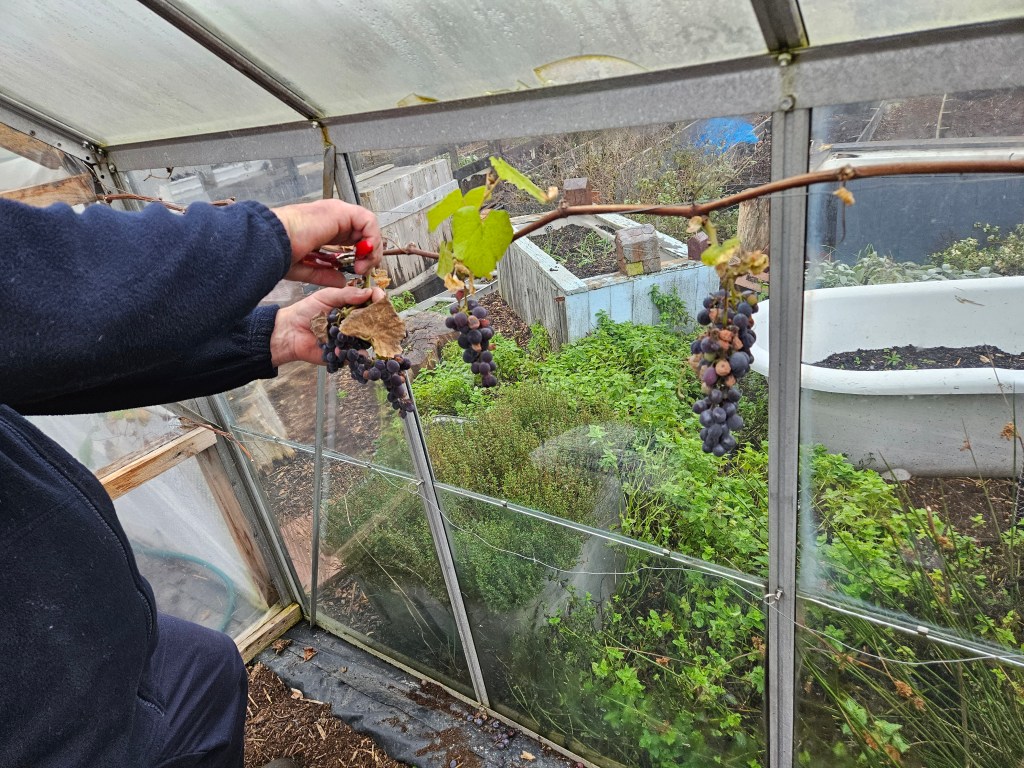
- Prune grapevines, cutting back side-branches to one or two buds from the main stem
Greenhouse
- Pot up a clump of rhubarb and place under a large bin to force an early crop of sweet stems
- Pick faded leaves and dead flowers regularly from plants overwintering in the greenhouse, such as pelargoniums
- Pinch out the tips of autumn-sown sweet peas to encourage bushier growth
- Deadhead indoor azaleas, water regularly and provide cool conditions, away from radiators, to prolong flowering
- Monitor greenhouse temperatures with a max-min thermometer to ensure heaters are working efficiently
- Bring hyacinths growing in the greenhouse into your home to flower, placing in a cool, bright spot
- Water plants sparingly to keep the greenhouse as dry as possible, which should reduce outbreaks of disease
- Prune greenhouse grapevines while dormant
- Move houseplants onto a sunny windowsill over the winter, to get as much light as possible during the shorter days
- Water florists’ cyclamen (Cyclamen persicum) from below, and deadhead regularly to encourage more blooms
- Check overwintering plants in the greenhouse for red spider mite and other pests, and treat if necessary
- Put out fresh water for birds every day during frosty weather
- Bring all watering equipment indoors, including hoses and sprinklers, so they don’t freeze and split
- Scoop fallen leaves and debris from ponds, leave on the side so pondlife can escape, then add to the compost bin
- Stand your Christmas tree in a bucket of water in a sheltered spot outdoors until it’s time to bring it indoors
- Clear out your shed, and organise and clean your tools
- Work off Christmas excesses by digging over bare areas of ground, incorporating garden compost
- Check tree ties and stakes are firm enough to stand up to winter storms
- Prune blackcurrants once dormant, removing about a quarter of the old stems
- Order well-rotted manure or mushroom compost to dig in over winter or spread over bare soil for worms to take downi
 nodig-with-us.co.uk